About
FOIRMYS
The First Open Institute for Regenerative
Medicine for Young Scientists (FOIRMYS) is a non-profit volunteer initiative
bringing together over a thousand enthusiast young scientists and physicians
interested in regenerative medicine. It was first organized by Alex Zhavoronkov, PhD in
collaboration with Sergey Yakovenko, PhD, Sergey Roumiantsev, PhD and Oleg
Korzinov in Moscow with support from Anna Chapman.
FOIRMYS provides regular weekly lectures by
the top academic and industry thought leaders, investors and regulators. The
list of presenters includes Paolo Macchiarini (Karolinska Institute), Alexey
Aravin (Caltech), Charles Cantor (Boston U, ex-director of the Human Genome
Project), Augustinus Bader (Leipzig University), top managers from Beijing
Genomics Institute, Malaysian Genome Resource Center, Indigo Capital Partners
and many others. As part of the curriculum students participate in practicums
at “Altravita IVF, FRCCPH, FORCC,
Quantum Pharmaceuticals, Biopharmcluster “Northern” and Moscow Institute of Physics and Technology.
Members work in small teams comprised of
scientists and physicians on ambitious outlier projects in aging and
regenerative medicine with topics ranging from mineralization of connective
tissue, HGPS and regulation of endometriosis to industry overviews and
healthcare economics. The projects are coordinated in a crowdsourced
environment and rely heavily on popular tools like Facebook, Dropbox and Google
Apps. FOIRMYS developed a concept called “Personalized Medicine”, where
projects are centered around the problems of a single patient, who provides
samples and helps coordinate the project. Members also learn how to promote
their work, create personal science blogs (including Women in Science
initiative) and engage in industry outreach.
Participation in practical group projects
resulted in success stories including young scientists’ publications in
peer-reviewed journals, fellowships, participation in international
conferences, gainful employment of young scientists and international
collaborations.

"Mineralization of connective tissue
with age is one of the many aspects of aging that are examples of
"accumulation of eventually pathogenic extracellular material", an
issue that attracts too little attention within the academic community. The
accumulation of advanced glycation endproducts (AGEs) and of mineral deposits
both result in increased stiffness of connective tissue, impair homeostasis and
contribute to a broad range of age-related diseases. Through comprehensive bioinformatic
analysis of the many molecular processes involved in mineralization,
Zhavoronkov's team have identified possible molecular interventions.
Additionally they propose that mineralization and AGEs work in concert and
should be addressed concurrently. Anastasia Shyndyapina, the lead author on the
paper, recently presented this work at the SENS6 conference in
Cambridge.", commented Dr. Aubrey de Grey, Chief Science Officer of SENS
Research Foundation and International Adjunct Professor at the Moscow Institute
of Physics and Technology (MIPT).
A
team of Russian scientists drills into the problem of age-related
mineralization of the connective tissue
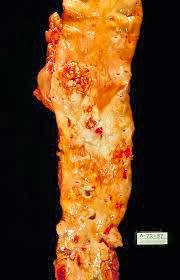
When you open a 70-year old patient on the
operating table and touch the aorta, the feeling may resemble touching an eggshell
or sand paper. It is stiffer than the heart of a young person and the key
reasons for this are the abundant calcium deposits in the connective tissue
that accumulate with age. Calcification is a significant cause of morbidity and
mortality because it is associated with atherosclerosis, chronic kidney disease
and osteoporosis.
The many factors leading to mineralization
of the connective tissue include genetic and acquired diseases, inflammation,
reactive oxygen species, but the major problem is that it occurs spontaneously
during aging as calcium-containing molecules are trapped in the extracellular
matrix and develop into apatite over time.
Despite its relative significance, compared
to the many other areas of aging research, mineralization of the connective
tissue is rarely mentioned in scientific publications and few teams are working
on preventing or clearing out the extracellular aggregates. There are currently no drugs to treat vascular
calcification.
To address the problem, a multidisciplinary
team of physicians, bioinformatitians, biochemists and physicists performed a
comprehensive bioinformatics analysis of the many factors involved in
mineralization, identified key molecular targets and proposed a list of
possible drugs to address the issue. The next steps are clinical and experimental research that are supposed to make a great
contribution to the design of new treatments for vascular calcification and the
regenerative medicine.
The results of the study were accepted for
publication by a high-impact journal in biogerontology “Rejuvenation Research”
and will be published shortly and can be cited as “Mineralization of the
connective tissue: a complex molecular process leading to age-related loss of
function”, Anastasia Shindyapina, Garik V Mkrtchyan, Tatiana Gneteeva,
Sveatoslav Buiucli, M Kulka, B Tancowny, Alexander Aliper, Alexander
Zhavoronkov, Rejuvenation Research, ahead of print. doi:10.1089/rej.2013.1475, http://online.liebertpub.com/doi/abs/10.1089/rej.2013.1475 ,
PMID 23902273
“Aging inevitably leads to the loss of
function on many levels. Mineralization of the connective tissue is one of the
causes and consequences of aging and is a complex multifactorial process. Metabolic
activity, diseases and external stress factors may cause calcification, but
most importantly, it occurs spontaneously. Our goal is to identify least toxic
ways to both prevent calcification and to repair the accumulated aggregates.”, said Anastasia Shindyapina,
ASUS Fellow for Bioinformatics and Medical Information Technology,
PhD-candidate at the Moscow State University and researcher at FOIRMYS.
For more info dear reader can see thats : http://regmed2012.wix.com/ineralizationsociety and http://www.pinterest.com/regenmed2012/

